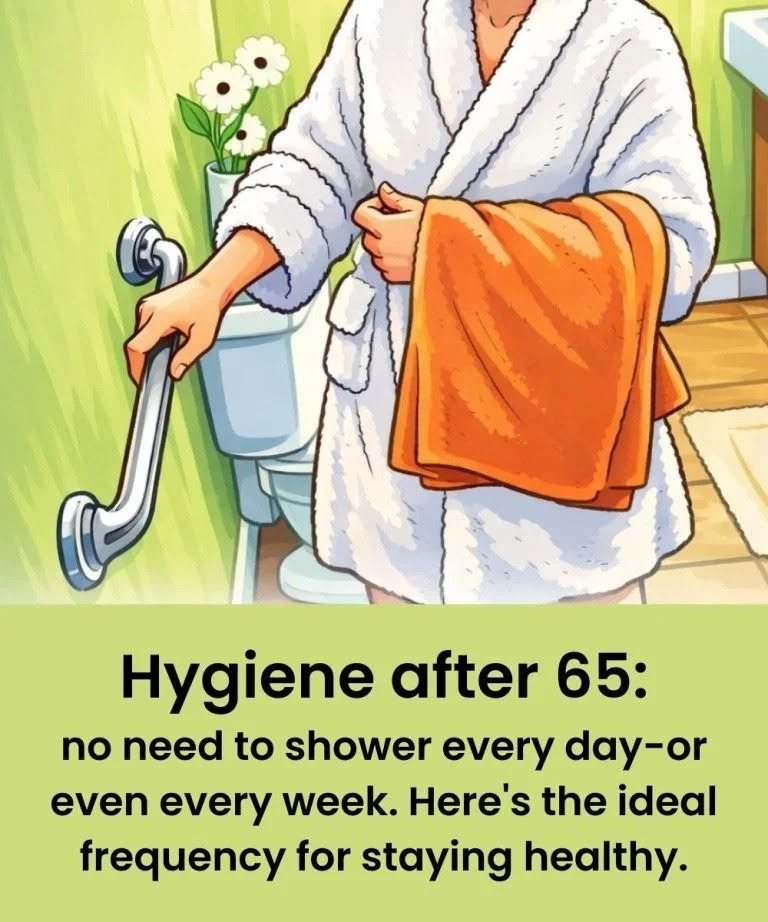
Why Daily Showers After 65 May Do More Harm Than Good
A daily shower may feel like an essential part of good hygiene, but after age 65, the skin often becomes thinner, drier, and more sensitive. For some older adults, long, hot showers every day can actually make itching, irritation, and dryness worse.
That does not mean people over 65 should stop bathing or that there is one perfect schedule for everyone. Hygiene needs vary depending on activity level, climate, sweating, incontinence, skin conditions, mobility, and personal preference.
The important question is not simply how often you shower, but how you wash and how your skin responds.
Why Skin Changes After 65
As we age, the skin naturally produces less oil and retains moisture less effectively. It also tends to become thinner and more fragile.
The National Institute on Aging notes that dry, itchy skin is common in older adults and that hot baths, hot showers, and excessive soap use can make dryness worse.
The American Academy of Dermatology also explains that skin in the 60s and 70s tends to lose water more easily and become more prone to dryness and irritation.
This means a bathing routine that worked perfectly at 30 may not feel as comfortable at 70.
1. Daily Hot Showers Can Strip Away Natural Oils
One of the biggest problems is not necessarily showering every day—it is showering with very hot water for too long.
Hot water removes natural oils from the surface of the skin. These oils help form a protective barrier that keeps moisture inside.
When that barrier is repeatedly stripped away, skin may become:
tight
flaky
rough
itchy
irritated
more prone to cracking
Dermatologists recommend warm rather than hot water, especially for people with dry or aging skin.
2. Soap Can Make the Problem Worse
Using strong soap over the entire body every day may remove even more protective oils.
Older skin often does better with a gentle, fragrance-free cleanser rather than heavily perfumed soaps or products that create a large amount of lather.
You also may not need cleanser on every inch of your body every time you shower.
For many people, it is enough to focus on areas that tend to accumulate sweat and bacteria, such as:
underarms
groin
feet
skin folds
visibly dirty areas
The American Academy of Dermatology recommends gentle cleansers and advises avoiding harsh products that can worsen dry skin.
3. Long Showers Can Increase Dryness
A relaxing 20- or 30-minute hot shower may feel good, but it is not ideal for already-dry skin.
Dermatologists generally recommend keeping baths or showers to about 5 to 10 minutes for people dealing with dry skin.
Shorter showers reduce prolonged exposure to water and cleansers while still allowing enough time for normal hygiene.
4. Dry Skin Can Become More Than a Cosmetic Problem
Very dry skin is not simply about appearance.
When skin becomes severely dry, it may:
For Complete Cooking STEPS Please Head On Over To Next Page Or Open button (>)