crack
itch intensely
become inflamed
bleed
become more susceptible to irritation
Older adults may already have more fragile skin and slower healing, so preventing excessive dryness becomes increasingly important.
Constant scratching can also damage the skin further.
5. Showering Every Day Is Not Mandatory for Everyone
One of the most important points is that there is no universal medical rule requiring every older adult to take a full shower every single day.
The American Academy of Dermatology specifically notes that some people in their 60s and 70s may find they do not need to bathe every day.
That does not mean going without hygiene for a week regardless of circumstances.
A person who:
exercises
sweats heavily
works outdoors
has incontinence
lives in a hot climate
has certain medical conditions
may need more frequent washing.
The right schedule should match the person’s actual needs.
So How Often Should Someone Over 65 Shower?
There is no single number that is right for every healthy older adult.
For someone who does not sweat heavily and has very dry skin, taking a full shower every other day—or adjusting frequency based on comfort and activity—may work perfectly well.
On non-shower days, important areas can still be cleaned with a washcloth and warm water.
People who need assistance with bathing because of dementia or mobility limitations may follow different schedules. For example, National Institute on Aging caregiving guidance for people with Alzheimer’s suggests that two or three full baths or showers per week may sometimes be sufficient, with more flexible washing as needed. That specific recommendation is for caregiving situations and should not be treated as a universal rule for every person over 65.
A Better Shower Routine After 65
Instead of focusing only on frequency, changing the way you shower may make a bigger difference.
Keep the Water Warm, Not Hot
Very hot water can strip away skin oils.
Comfortably warm water is usually kinder to aging skin.
Keep It Short
Aim for roughly 5 to 10 minutes rather than staying under hot water for a long time.
Use a Gentle Cleanser
Choose a fragrance-free, moisturizing cleanser whenever possible.
Avoid aggressively scrubbing the skin.
Skip Rough Brushes and Scrubbers
Older skin can be more easily irritated.
A soft washcloth or your hands are often enough.
Pat Dry Instead of Rubbing
After showering, gently pat the skin with a towel.
Aggressive rubbing can irritate fragile or already-dry skin.
The 3-Minute Moisturizer Rule
One of the simplest ways to protect older skin is to moisturize soon after bathing.
The American Academy of Dermatology recommends applying a creamy, fragrance-free moisturizer while the skin is still slightly damp, ideally within a few minutes of bathing.
This helps trap moisture in the skin.
Creams and ointments are often more effective for very dry skin than thin lotions.
Areas That Still Need Regular Cleaning
Even if you reduce the number of full showers, daily hygiene can still include cleaning areas such as:
face
hands
underarms
groin
feet
skin folds
areas affected by urine or stool
Good hygiene does not require washing the entire body with strong soap every day.
Be Careful With Bath Oils
Adding oil directly to bathwater may sound like a good solution for dry skin, but it can make the bathtub dangerously slippery.
Both the National Institute on Aging and dermatology guidance emphasize safer moisturizing approaches rather than creating a slippery bathing surface.
This is particularly important because falls become more dangerous with age.
Shower Safety Matters Too
For older adults, bathing is not only a skin-care issue. It can also be a fall-risk issue.
Useful precautions include:
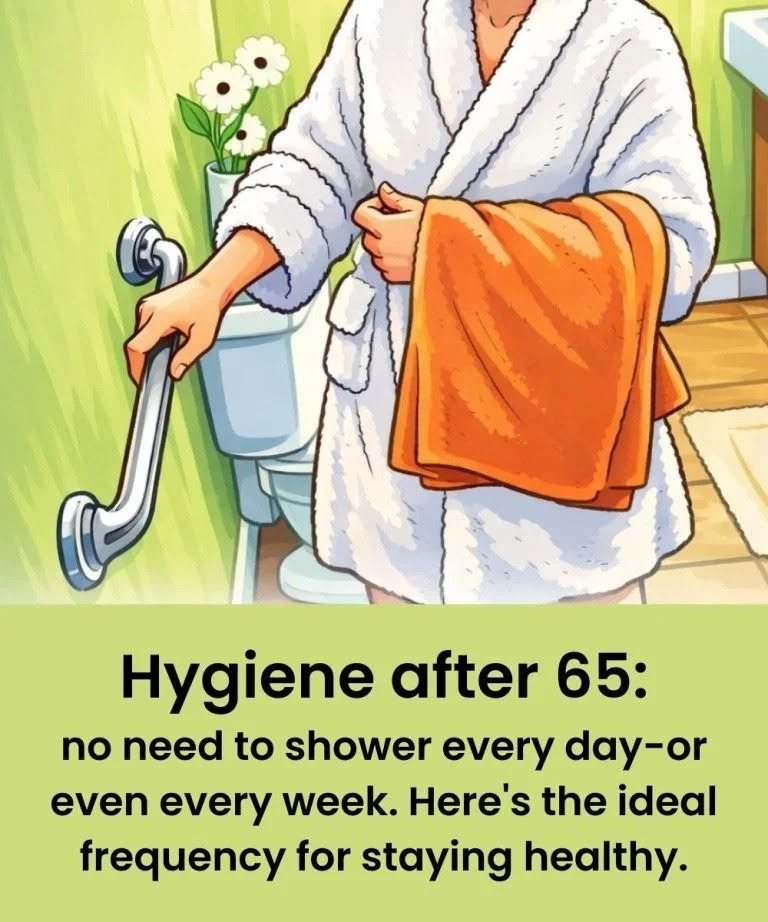
installing grab bars when needed
using a non-slip shower surface
keeping towels within easy reach
avoiding slippery bath products
using a shower chair if balance is poor
keeping the bathroom comfortably warm
A person with significant mobility or balance problems may need assistance.
When More Frequent Bathing May Be Necessary
Some circumstances call for more regular washing.
These include:
heavy sweating
physical exercise
hot weather
incontinence
skin infections
wound care
certain medical treatments
healthcare instructions requiring specific hygiene
Incontinence in particular requires careful cleaning to reduce irritation and protect the surrounding skin.
When to Speak With a Doctor or Dermatologist
Persistent dry skin should not always be dismissed as “just aging.”
Seek medical advice if you develop:
intense or persistent itching
cracking or bleeding skin
redness that does not improve
swelling
open sores
signs of infection
a new widespread rash
sudden major changes in your skin
Dryness can sometimes be associated with medications or underlying medical conditions as well as normal aging.
The Bottom Line
Daily showers after 65 are not automatically harmful, and there is no rule saying older adults should avoid showering every day.
The real problem is often the combination of hot water, long showers, harsh soap, and inadequate moisturizing.
Because older skin tends to become thinner and drier, many people benefit from shorter showers, warm water, gentle cleansers, and moisturizer immediately afterward. Some may also find that a full shower every day simply is not necessary.
The best bathing routine is the one that keeps you clean and comfortable without leaving your skin dry, itchy, or irritated.
For Complete Cooking STEPS Please Head On Over To Next Page Or Open button (>)